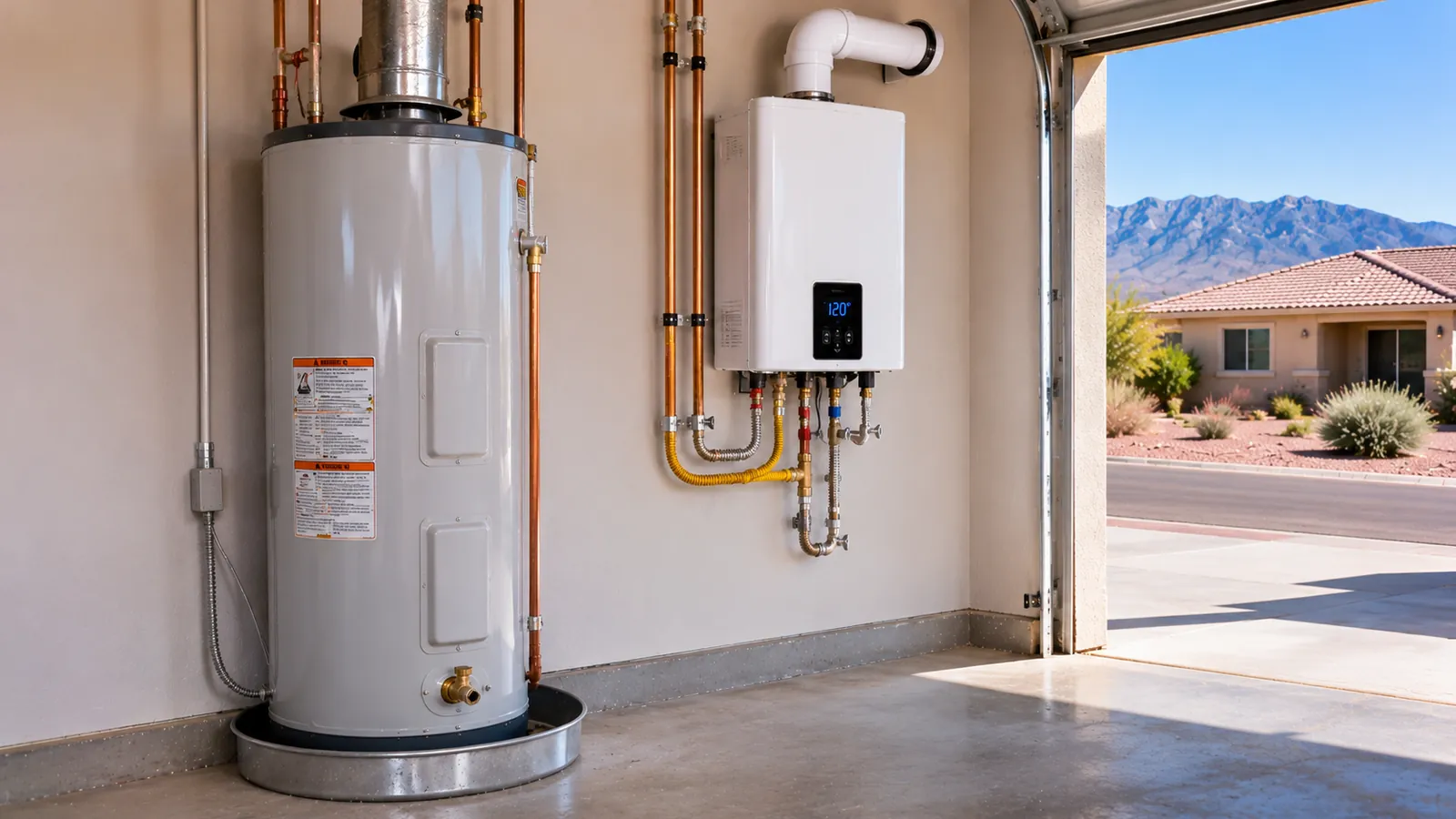
Hot water problems, fixed the right way
A water heater is one of those things nobody thinks about until the shower turns cold. Then it's the only thing that matters. Whether you're in a Northeast Heights ranch home, a two-story on the Westside or an older house in the North Valley, the first questions are always the same: Can it be fixed? What will it cost? How soon can someone get here?
We answer those questions honestly. If a $30 part will get you another five years, we'll tell you. If the tank is leaking and nothing will save it, we'll show you why and give you replacement options that fit your house and your budget, from a straight swap to a high-efficiency tankless or heat pump unit that may qualify for a utility rebate.
What we work on
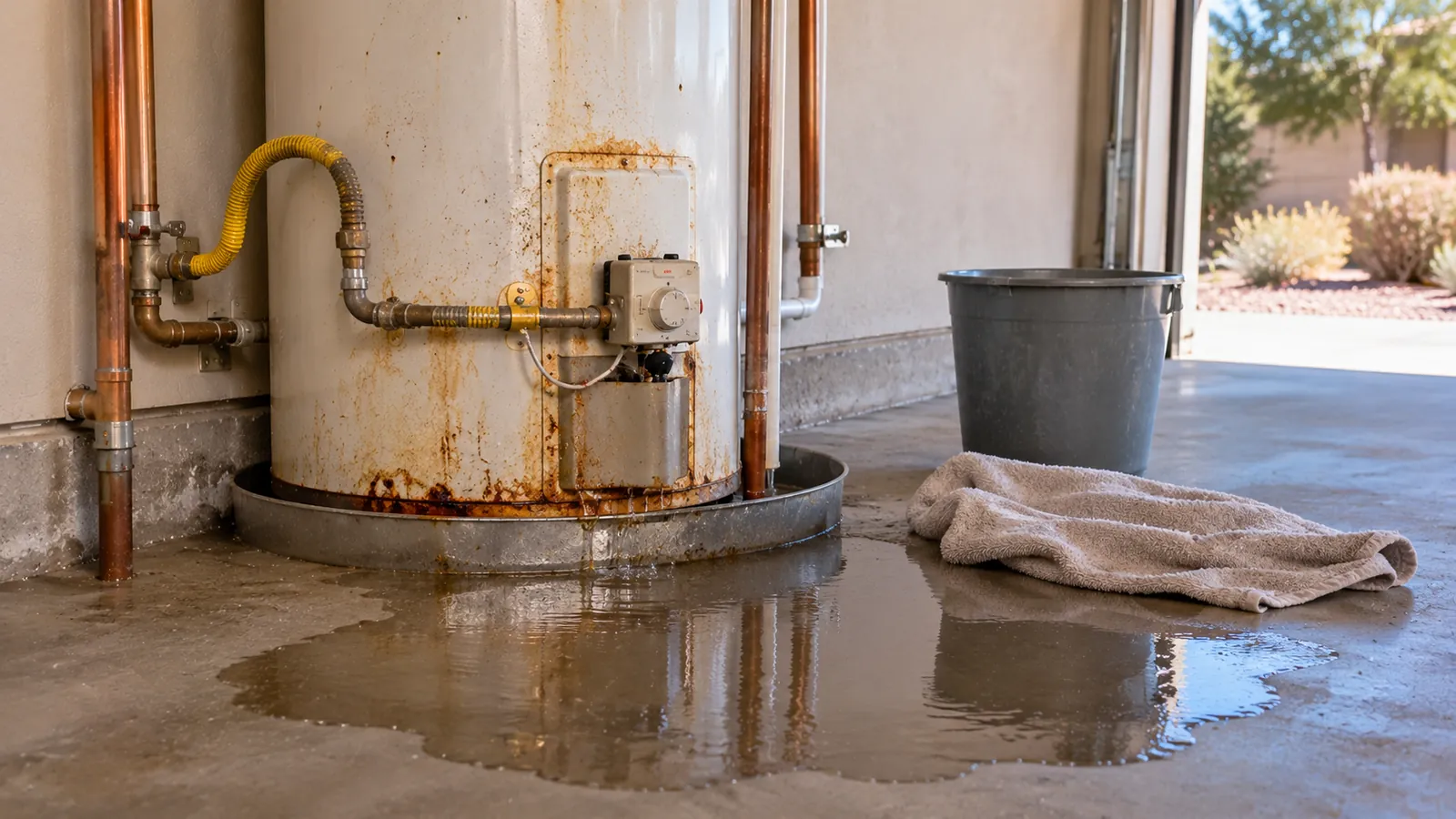
Signs your water heater needs attention
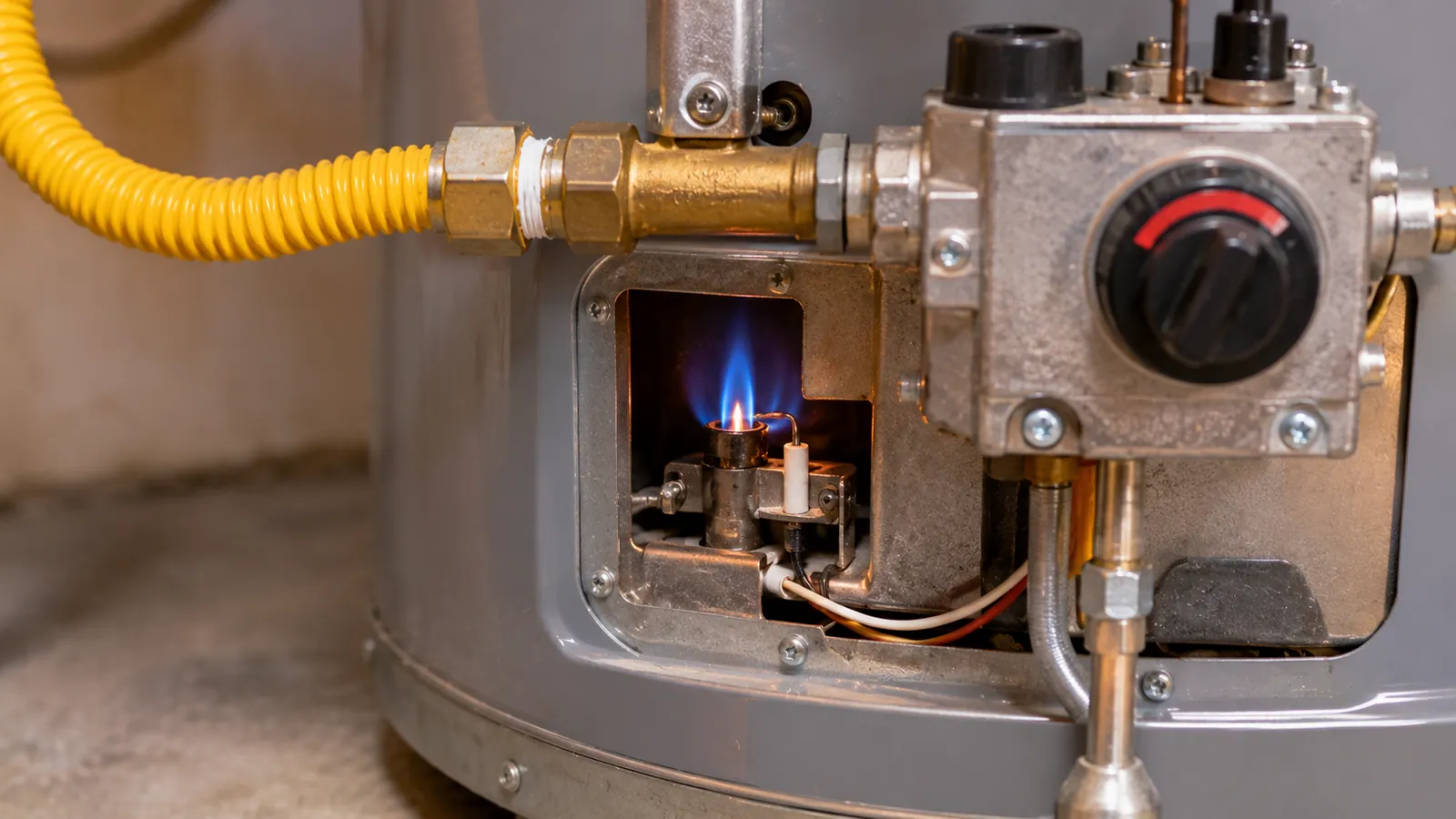
- No hot water, or it runs out fast. On gas units it's often the pilot, thermocouple or gas valve. On electric units, an element or thermostat. Running out fast can also mean sediment has filled the bottom of the tank.
- Water on the floor. A drip from a fitting or the relief valve can often be fixed. Water coming from the tank itself means the tank is done.
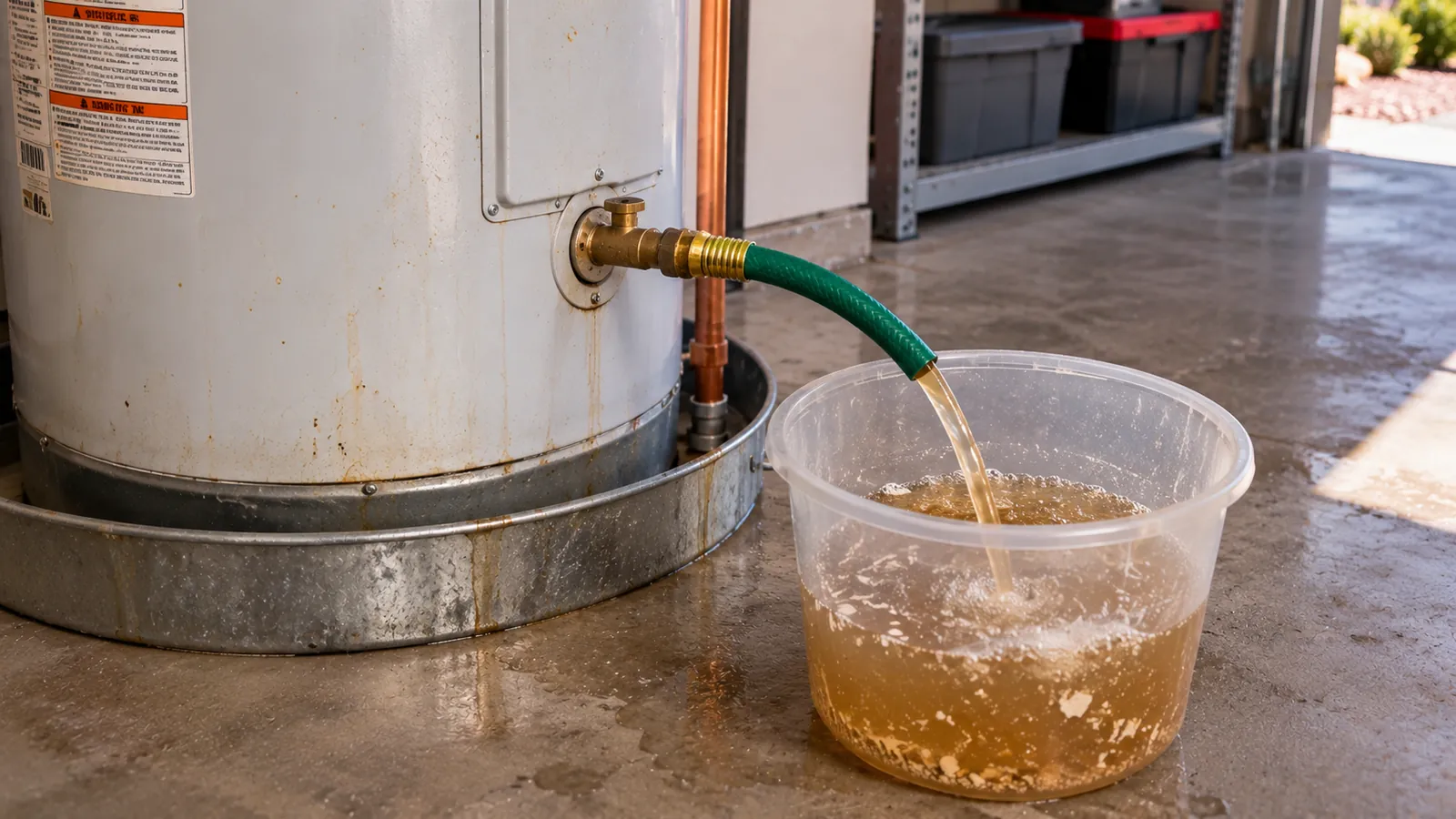
- Rumbling, popping or knocking. That's water boiling under a layer of sediment. Common in Albuquerque because of hard water.
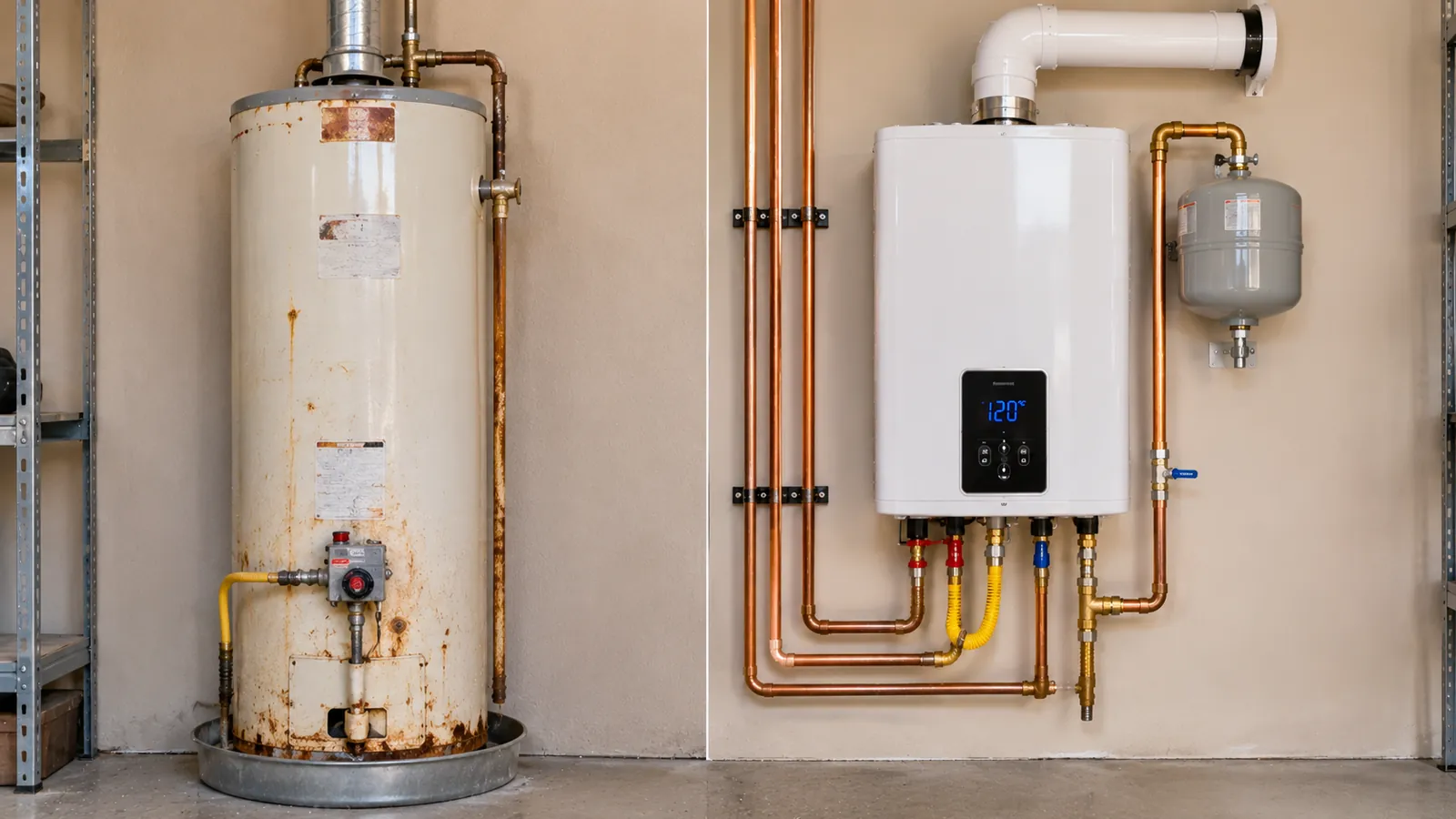
- Rusty or cloudy hot water. Can mean a worn-out anode rod or corrosion inside the tank.
- Rotten-egg smell. Usually a reaction with the anode rod, and fixable.
- Pilot won't stay lit or the burner won't fire.
- Relief valve dripping or discharging. Could be too much pressure or temperature, or a failing valve. Don't plug it.
- Age. A tank past ten years old is living on borrowed time, even if it seems fine.
Repair or replace?
| Situation | Usually the right call |
|---|---|
| Gas heater won't light or stay lit, tank is dry | Repair: thermocouple, igniter, gas valve or venting |
| Electric heater has no hot water or lukewarm water | Repair: element or thermostat |
| Rumbling, slow recovery, tank under about 8 years | Flush the sediment, check the anode rod |
| Leak from a fitting, valve or connection | Repair the fitting or replace the valve |
| Water leaking from the tank body or the bottom seam | Replace. A leaking tank can't be fixed. |
| Rust in the hot water, tank over about 10 years | Replace before it fails |
| Not enough hot water for the household anymore | Replace with a larger tank or tankless |
We'll show you what we find and explain both options. See water heater repair and water heater replacement.
Why Albuquerque is hard on water heaters
Hard water and sediment
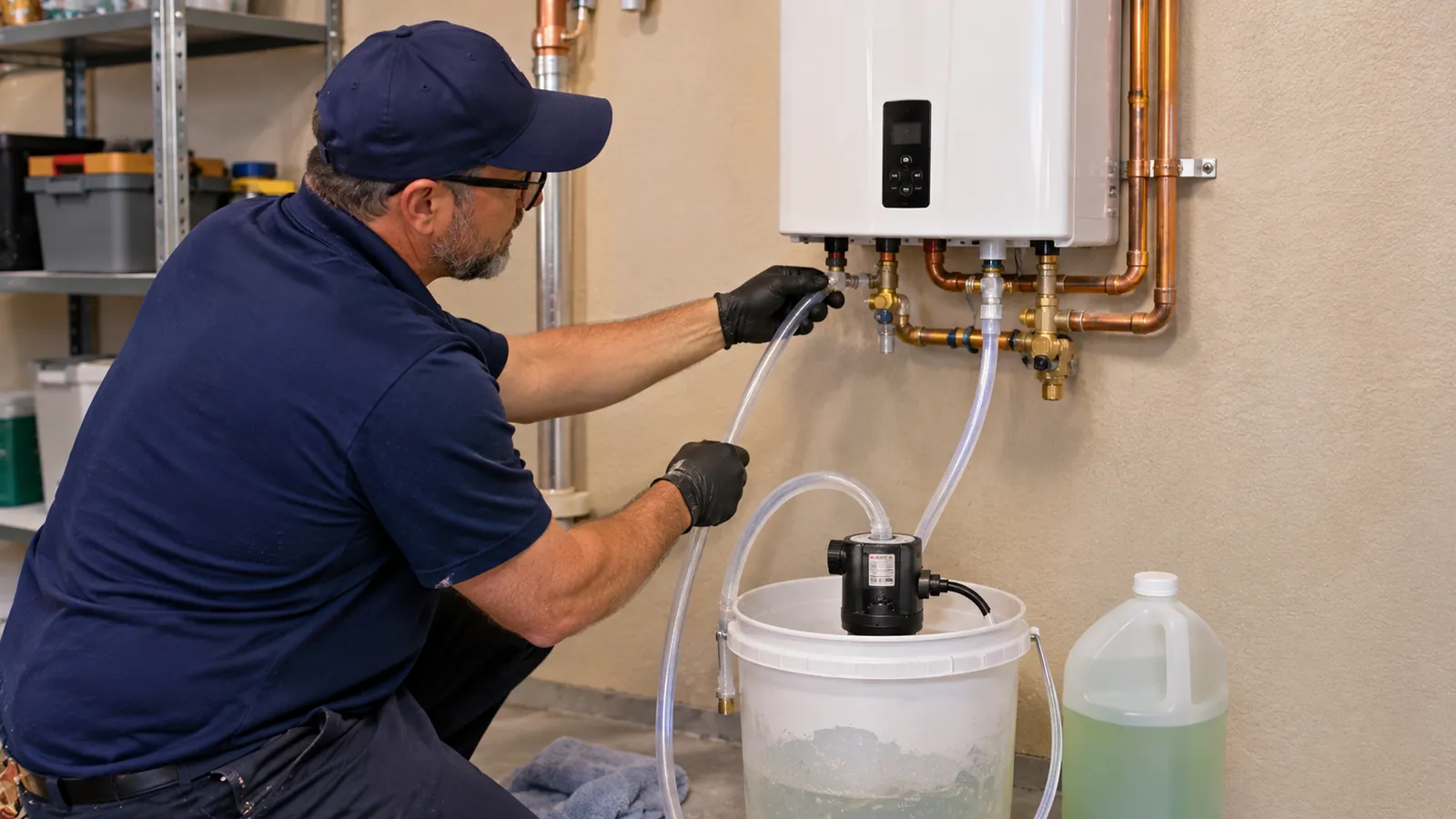
Albuquerque's water carries a lot of dissolved minerals. When it's heated, those minerals settle to the bottom of the tank as sediment. Sediment insulates the water from the burner, so the heater runs longer, gets noisy, wastes gas and overheats the bottom of the tank. Over the years it's one of the main reasons tanks fail early here. A yearly flush makes a real difference. On tankless units, the same minerals build scale inside the heat exchanger, which is why they need periodic descaling. See flushing and maintenance.
Altitude and gas appliances
At a mile high, there's less oxygen in the air for burning gas. Gas water heaters have to be the right model and set up correctly for altitude, with proper venting and combustion air. A heater that's starved for air or poorly vented can produce soot and carbon monoxide. We check venting and combustion air on every gas install.
Garages that freeze and closets that cook
Many Albuquerque water heaters live in garages that get cold on winter nights, or in tight closets with little airflow. Cold garages make heaters work harder and can be a problem for some heat pump models. Tight closets can starve gas units of combustion air. Location matters when you choose a replacement.
Tank, tankless or heat pump?
When it's time to replace, you have three real choices:
- Tank (gas or electric). The simplest and least expensive swap. Holds a set amount of hot water and keeps it hot all day.
- Tankless. Heats water as you use it, so it doesn't run out and doesn't waste energy keeping a tank hot. Takes up little space on the wall. Gas tankless usually needs a bigger gas line and new venting. See tankless water heaters.
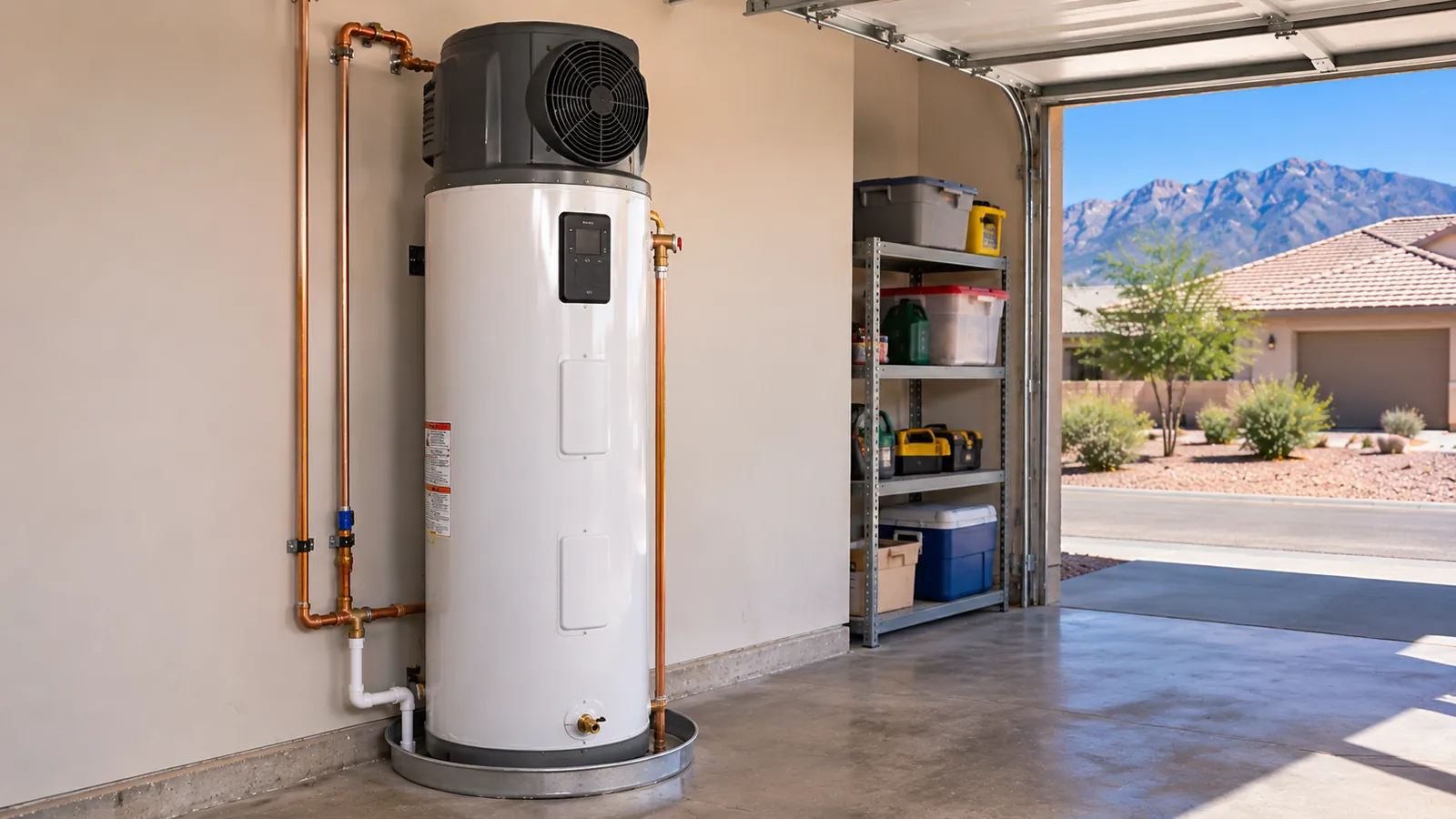
- Heat pump water heater. An electric tank that uses heat-pump technology to heat water far more efficiently than standard electric. Needs room and air around it, and may qualify for PNM and state rebates. See heat pump water heaters.
We'll talk through how many people are in the house, how you use hot water, where the heater sits, and what your gas line and electrical panel can support. Our tankless vs. tank guide goes deeper.
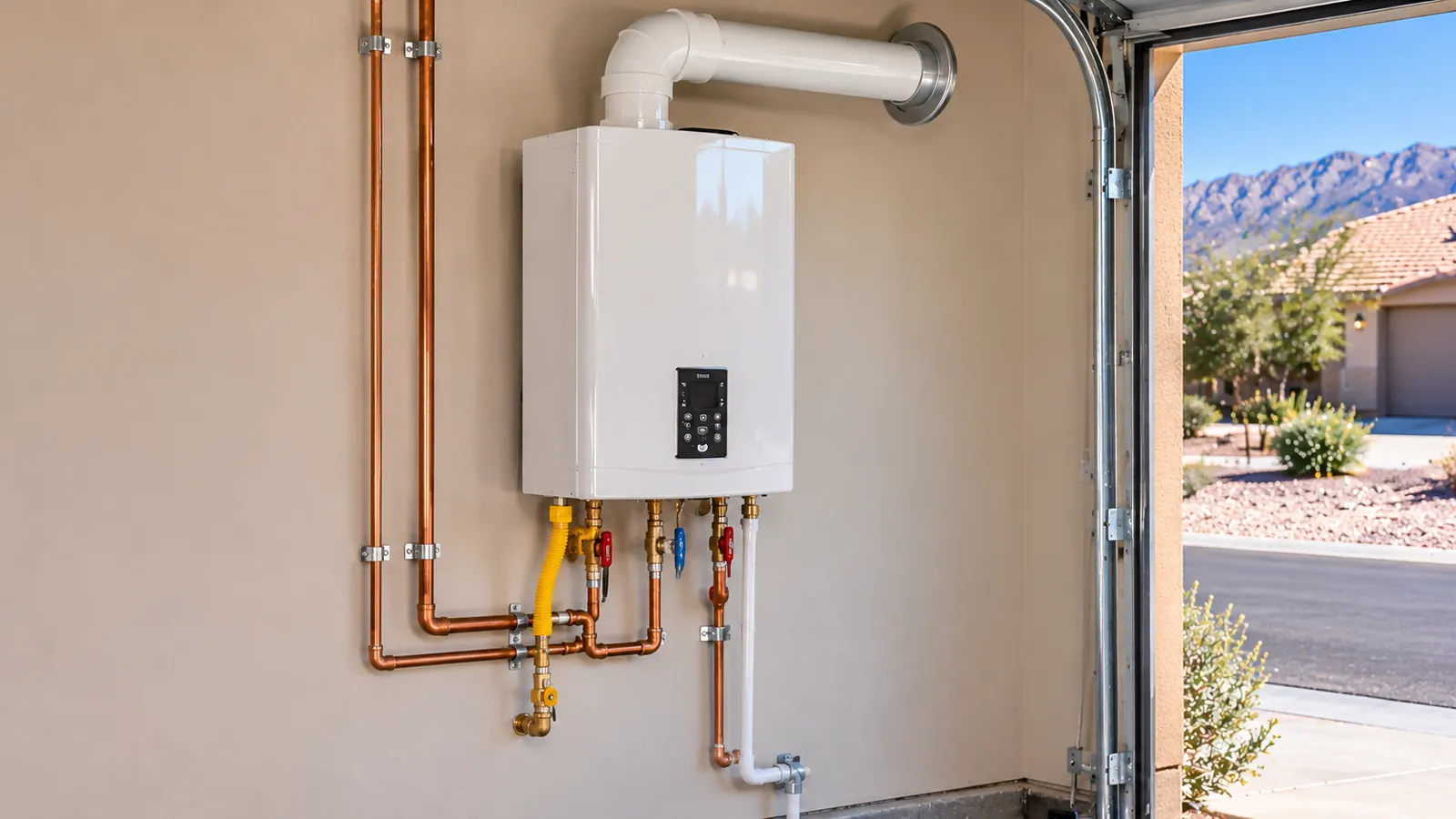
What size water heater do you need?
Undersizing is the most common reason people run out of hot water. Tanks are sized by how much hot water you use in your busiest hour; tankless units by how many fixtures run at once and how cold the incoming water is.
| Household | Typical gas tank | Typical tankless approach |
|---|---|---|
| 1–2 people | 30–40 gallons | One shower plus a faucet at the same time |
| 3–4 people | 40–50 gallons | Two showers at once in winter |
| 5+ people or a large tub | 50–75 gallons | Two to three fixtures at once, or two units |
These are starting points. We size from your actual fixtures, the tub, and how your household uses water, and we size tankless units for January water temperatures, not July.
Tankless done right: gas line and venting
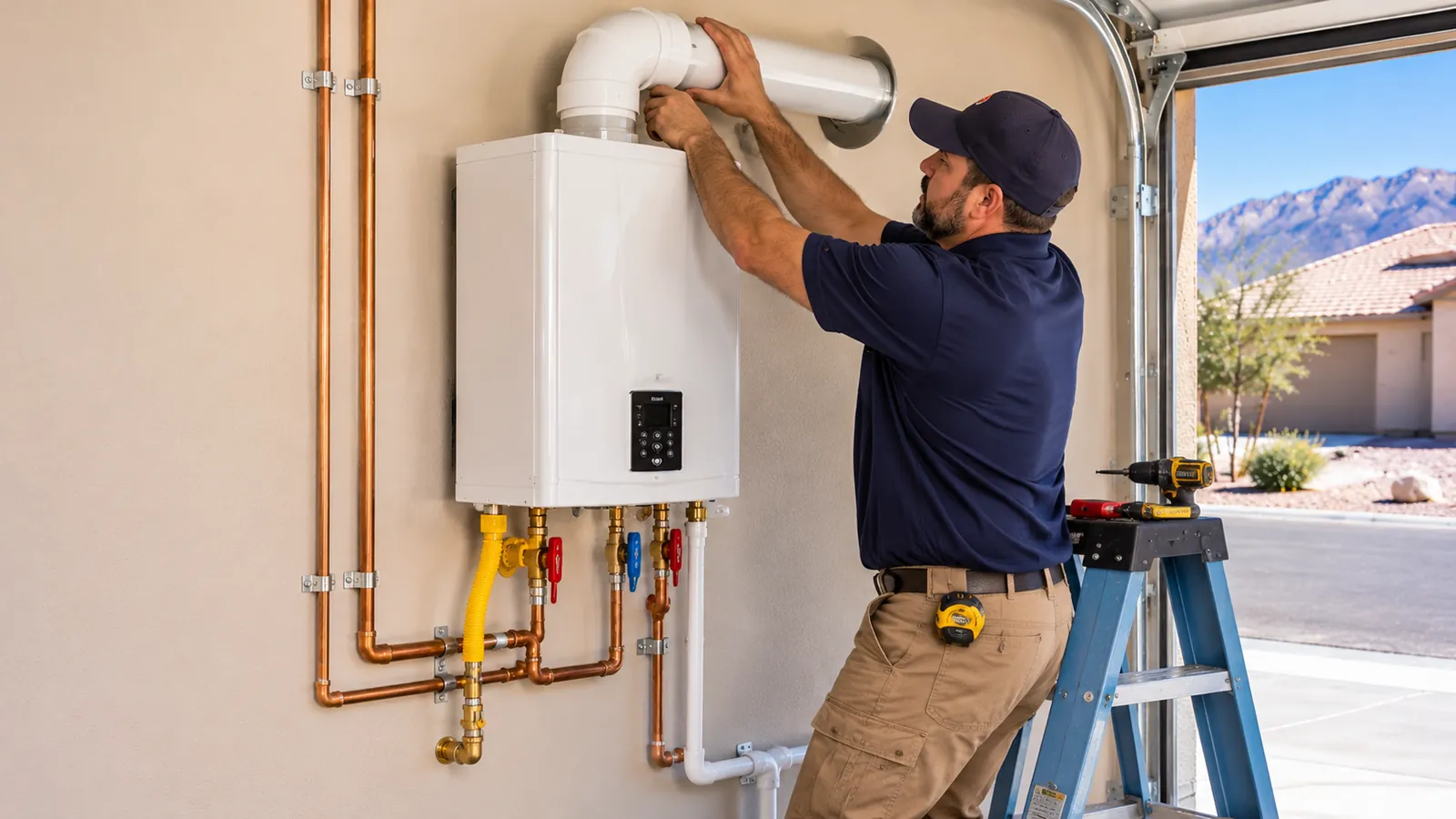
Most of the tankless problems we're called about come from installs that skipped the hard parts. A whole-house gas tankless unit can draw several times the gas of a 40-gallon tank while it's running. If the gas line was sized for the old tank, the unit starves when the furnace or stove is on too, and throws ignition errors. We measure the run and the load and upsize the line when it's needed.
Venting matters just as much. Non-condensing units need stainless or category-rated venting; condensing units vent with plastic pipe but need a condensate drain, often with a neutralizer. The vent has to terminate the right distance from windows, doors and the roof. At Albuquerque's altitude, combustion air and the unit's elevation setup also have to be right.
Brands we install and service
We work on the brands Albuquerque homes actually have, including Rheem, Bradford White and A.O. Smith tank heaters, and Rinnai and Navien tankless units, among others. We'll recommend a model based on your house, not on which brand has the biggest sticker, and we'll tell you which models qualify for rebates.
Waiting forever for hot water?
If it takes a minute or more for hot water to reach a far bathroom, the heater may be fine; the problem is distance. A hot water recirculation pump keeps hot water close to the fixtures so it arrives quickly and you don't run gallons down the drain. Many tankless units can be set up for recirculation too. In long, sprawling ranch homes and Valley houses, it's one of the most appreciated upgrades we install.
How a replacement works
- We look first. Size, fuel type, venting, gas line, water connections, location and what the code requires today.
- You get a written price for the heater and installation, with options if you want them.
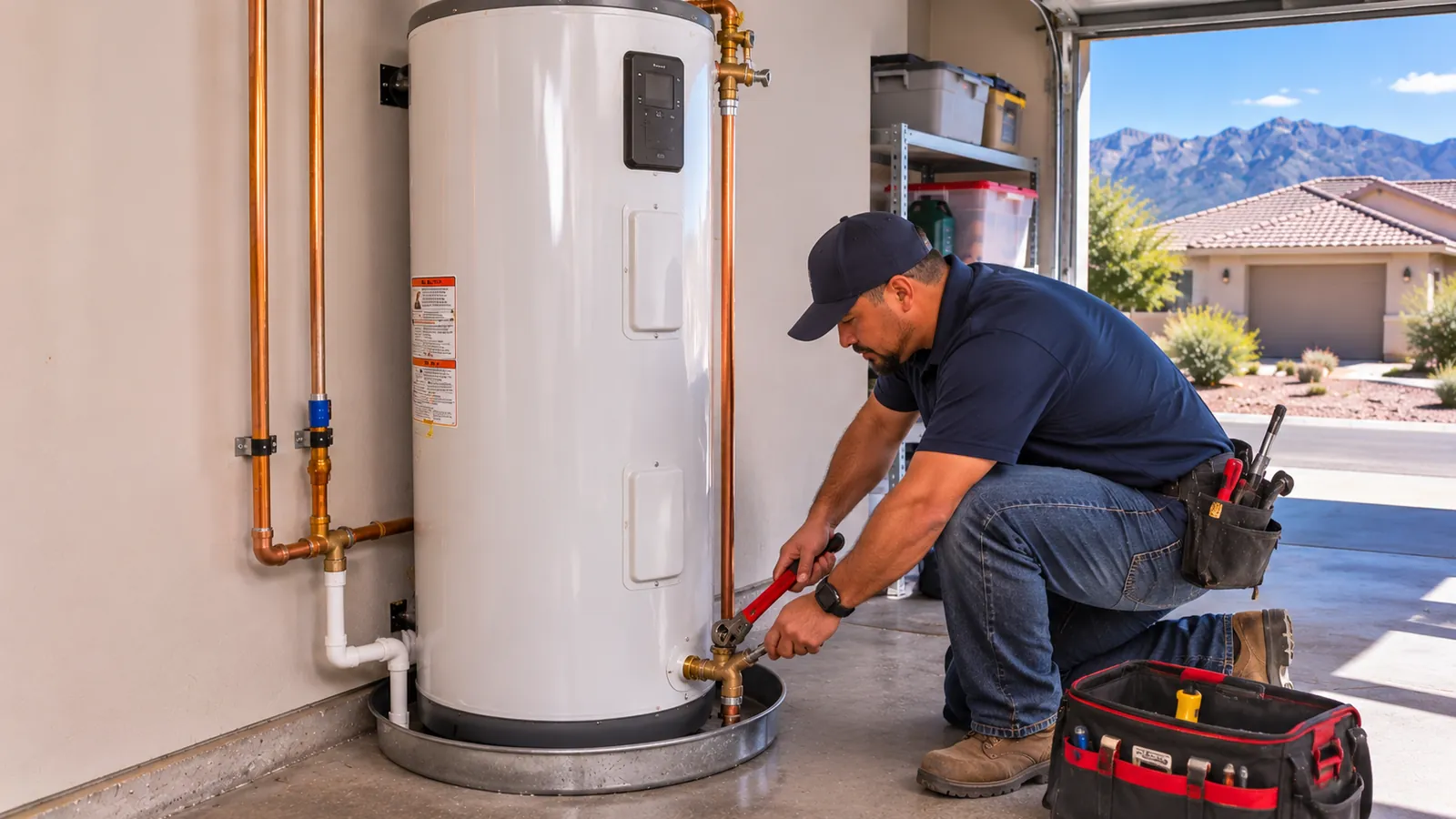
- Install day. We shut off gas or power and water, drain and remove the old heater, set the new one in a pan where needed, and connect water, gas or power and venting.
- Safety items. Relief valve and discharge line, expansion tank where required, shutoff valves, and checks for gas leaks and proper draft.
- Startup and walkthrough. We fill, fire and test the heater, set the temperature and show you the shutoffs.
- Haul-away. The old heater leaves with us.
Rebates that can lower the cost
Which rebate you can get depends on the fuel. Gas tank and tankless heaters fall under New Mexico Gas Company's rebate program, which has offered instant rebates on qualifying high-efficiency models. Heat pump water heaters are discounted through PNM, and New Mexico's HEAR program lists larger rebates for income-qualified households when an authorized contractor does the work. Programs, amounts and deadlines change, so we keep the current details on our water heater rebates page with links to the official sources.
Safety: when to call right away
- You smell gas. Leave the house and call your gas company or 911 from outside. Don't flip switches.
- The relief valve is blowing hot water or steam. Turn off the gas or power to the heater and the cold water supply, and call.
- Water is spreading toward walls, flooring or electrical. Shut off the cold water to the heater and call.
- Soot around the burner or vent, or a carbon monoxide alarm. Turn the heater off and call.
Where we work
We service water heaters across Albuquerque, from the foothills to the West Mesa and down to the South Valley.


What to expect when you call
- A real person who asks what the heater is doing, how old it is and whether it's gas or electric.
- An honest read on whether it sounds like a repair or a replacement.
- A time to come out, and a price before any work starts.
We're a call-only service: no online forms. Call, tell us what's going on, and we'll get you hot water again. Call (505) 479-3940
Water heater guides
- Water Heater Rebates in Albuquerque
- Water Heater Cost in Albuquerque
- Tankless vs. Tank for Albuquerque Homes
- Water Heater Leaking From the Bottom
- Why Your Water Heater Pops and Rumbles
- Hot Water Smells Like Rotten Eggs
- Water Heater Pilot Won't Stay Lit
- Tankless Water Heater Not Getting Hot
- Albuquerque Hard Water and Your Water Heater
- 7 Signs Your Water Heater Is Failing
Questions we hear
How much does water heater repair cost in Albuquerque?
It depends on what failed. Replacing a thermocouple, igniter, element or thermostat costs far less than replacing the heater. A leaking tank can't be repaired and has to be replaced. We tell you which it is and give you the price before we do the work. Our water heater cost guide explains what drives the number.
Should I repair or replace my water heater?
If the tank itself is leaking, replace it. If a part like a thermocouple, gas valve, element or thermostat failed on a heater that's under about ten years old, a repair usually makes sense. Past that age, or if repairs are piling up, replacement is usually the better money.
How long do water heaters last in Albuquerque?
Tank heaters commonly last around 8 to 12 years. Albuquerque's hard water shortens that when sediment builds up in the bottom of the tank. Flushing the tank and checking the anode rod helps it last longer.
Is tankless worth it in Albuquerque?
For many households, yes: endless hot water, a smaller footprint and lower standby losses. A gas tankless unit often needs a larger gas line and new venting, so the install costs more than swapping a tank. See tankless vs. tank.
Are there rebates for water heaters in Albuquerque?
Yes, but they depend on the fuel. Gas tank and tankless water heaters are covered by New Mexico Gas Company rebates, not PNM. PNM, the electric utility, discounts qualifying heat pump water heaters. Income-qualified households may also be eligible for state HEAR rebates. Details change, so check our water heater rebates page and confirm with the program before you buy.
Do you handle gas and electric water heaters?
Yes. Gas and electric tanks, gas and electric tankless, and heat pump water heaters.
Why does my hot water smell like rotten eggs?
Usually bacteria reacting with the anode rod in the tank. Flushing the tank and replacing the anode with a different type normally fixes it.