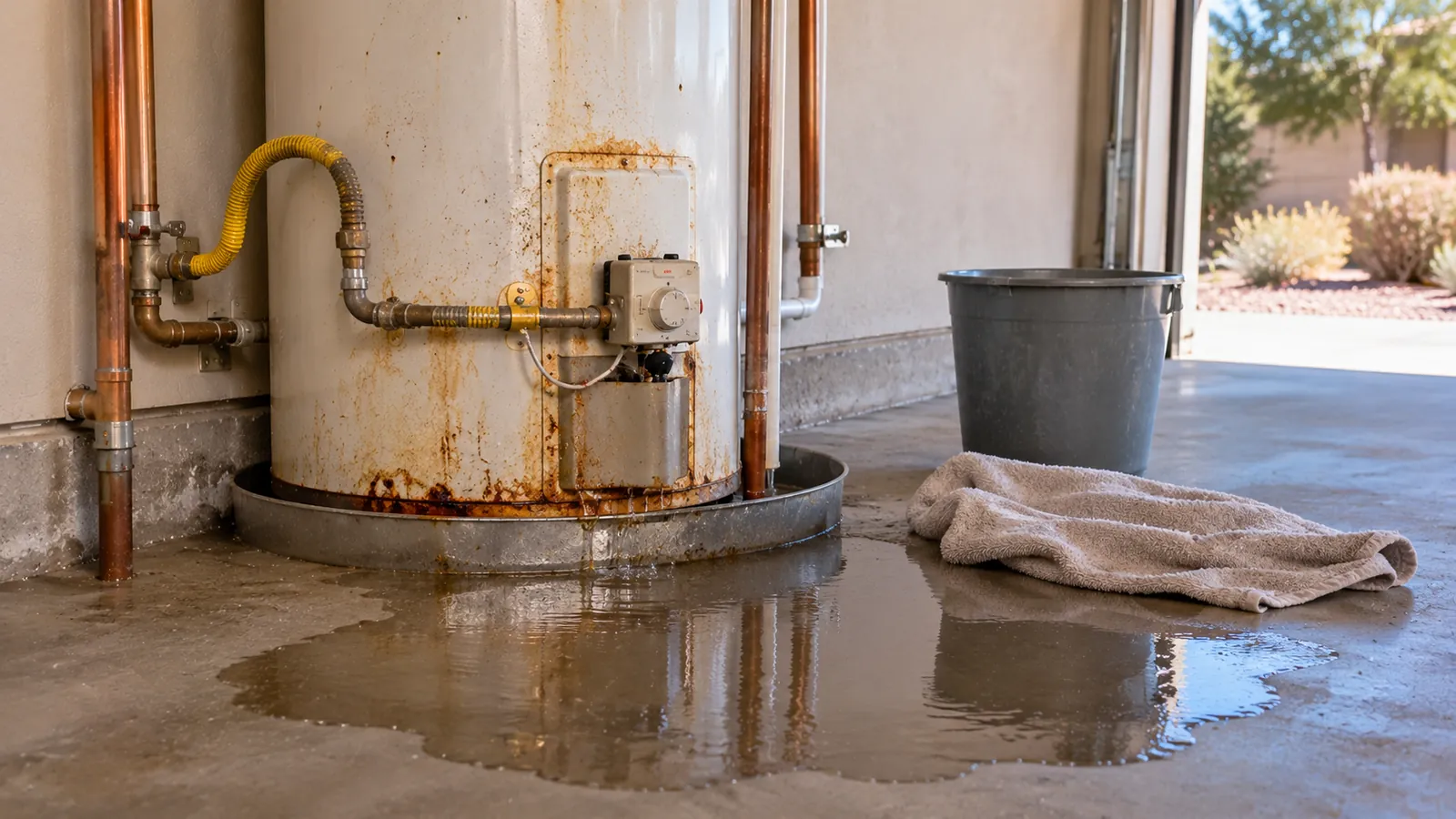
Do this first
- Turn the gas control to off or pilot, or switch off the breaker for an electric heater.
- Close the cold water valve on the pipe going into the top of the heater.
- Move anything you care about away from the water.
Find where it's coming from
| Where the water is | Likely cause | Fixable? |
|---|---|---|
| Dripping from the drain valve near the bottom | Worn or loose drain valve | Yes, replace the valve |
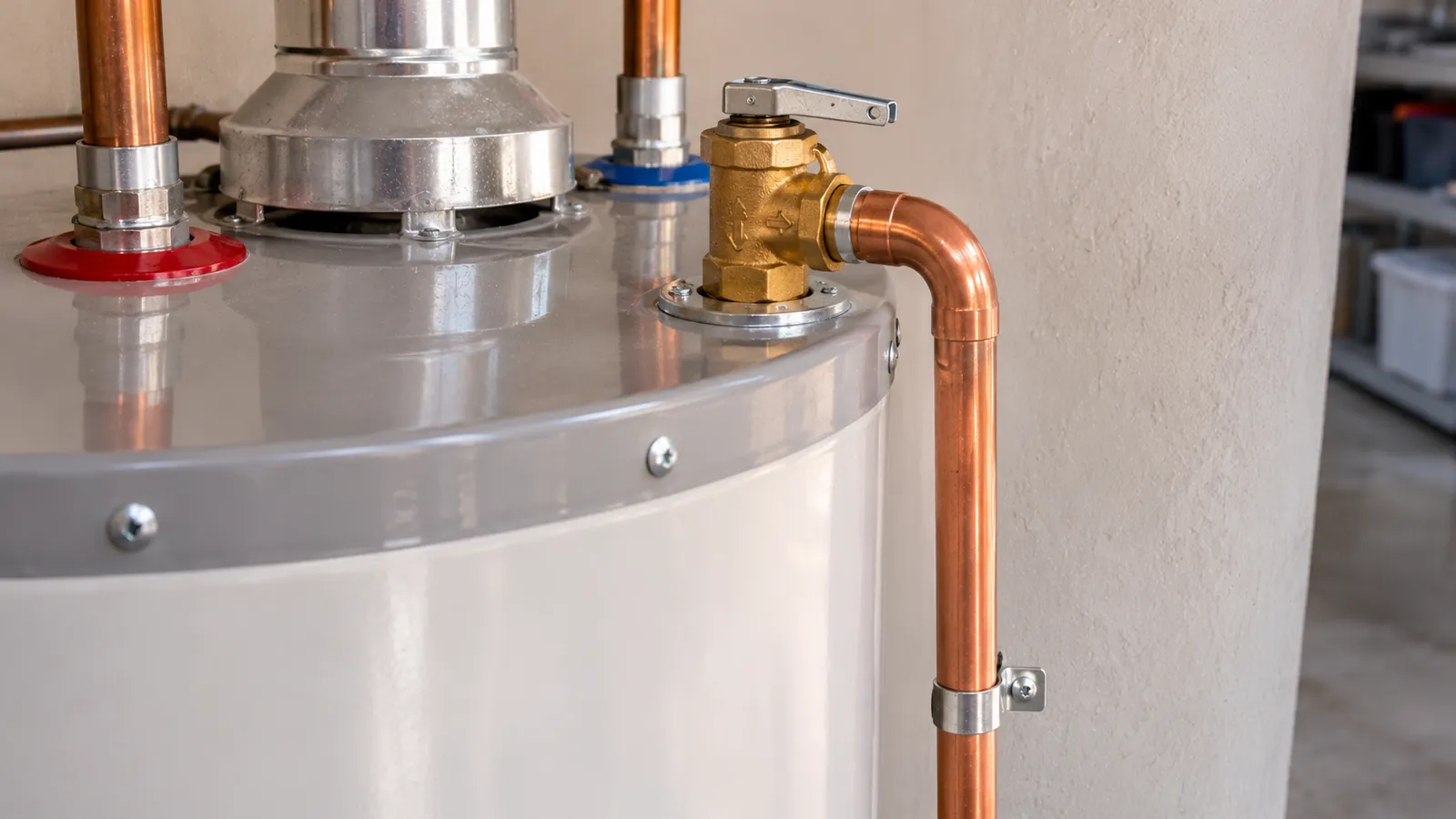
| Coming from the relief valve pipe that runs down the side | Relief valve opening from high pressure or temperature, or a failing valve | Yes, find the cause |
| Running down the outside from fittings on top | Leaking connection | Yes |
| Condensation on a gas unit after a cold refill | Normal for a short time | Usually goes away |
| Seeping from under the jacket or the bottom seam | The tank itself has corroded through | No, replace the heater |
Why tanks fail here
Albuquerque's hard water leaves sediment in the bottom of the tank. Over the years it overheats the steel, and once the anode rod is used up the tank starts to rust from the inside. A rusting tank eventually weeps from the bottom.
If it's the tank, see water heater replacement. If it's a valve or fitting, see water heater repairs.
Questions we hear
Can a leaking water heater tank be patched?
No. Once the tank itself leaks, the only safe fix is replacement.
Is it safe to keep using it?
Turn it off and shut off the cold supply until it's checked. Leaks can get worse quickly.
Why is my relief valve leaking?
Too much pressure (often a missing expansion tank), too much temperature, or a worn valve.