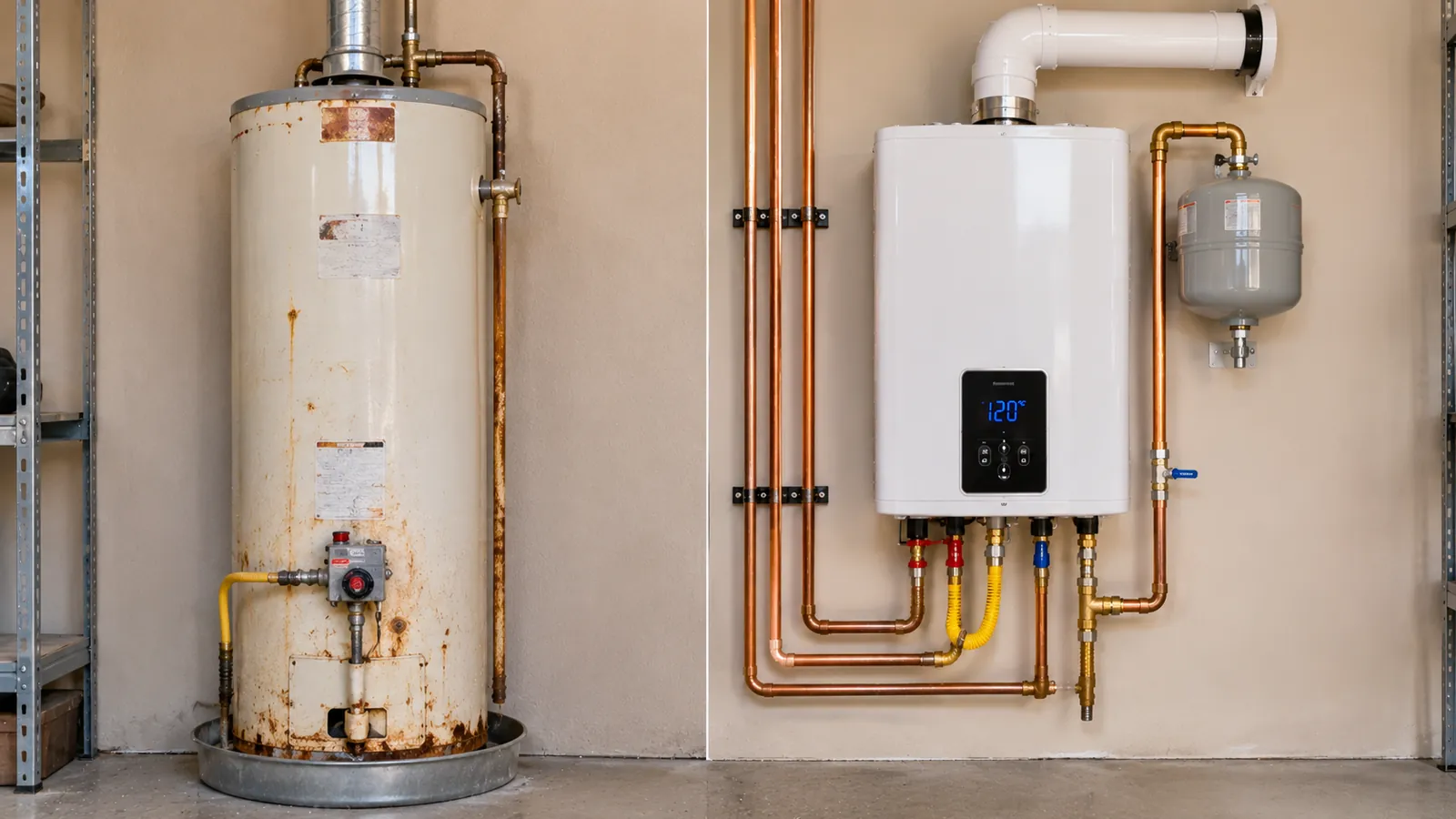
The big three cost drivers
- Type of heater. A same-size tank swap is the least expensive. Heat pump units cost more up front. Tankless costs the most to install because of gas and venting work.
- What has to change. Keeping the same fuel, size and location is simple. Moving the heater, switching fuel or going tankless adds labor and materials.
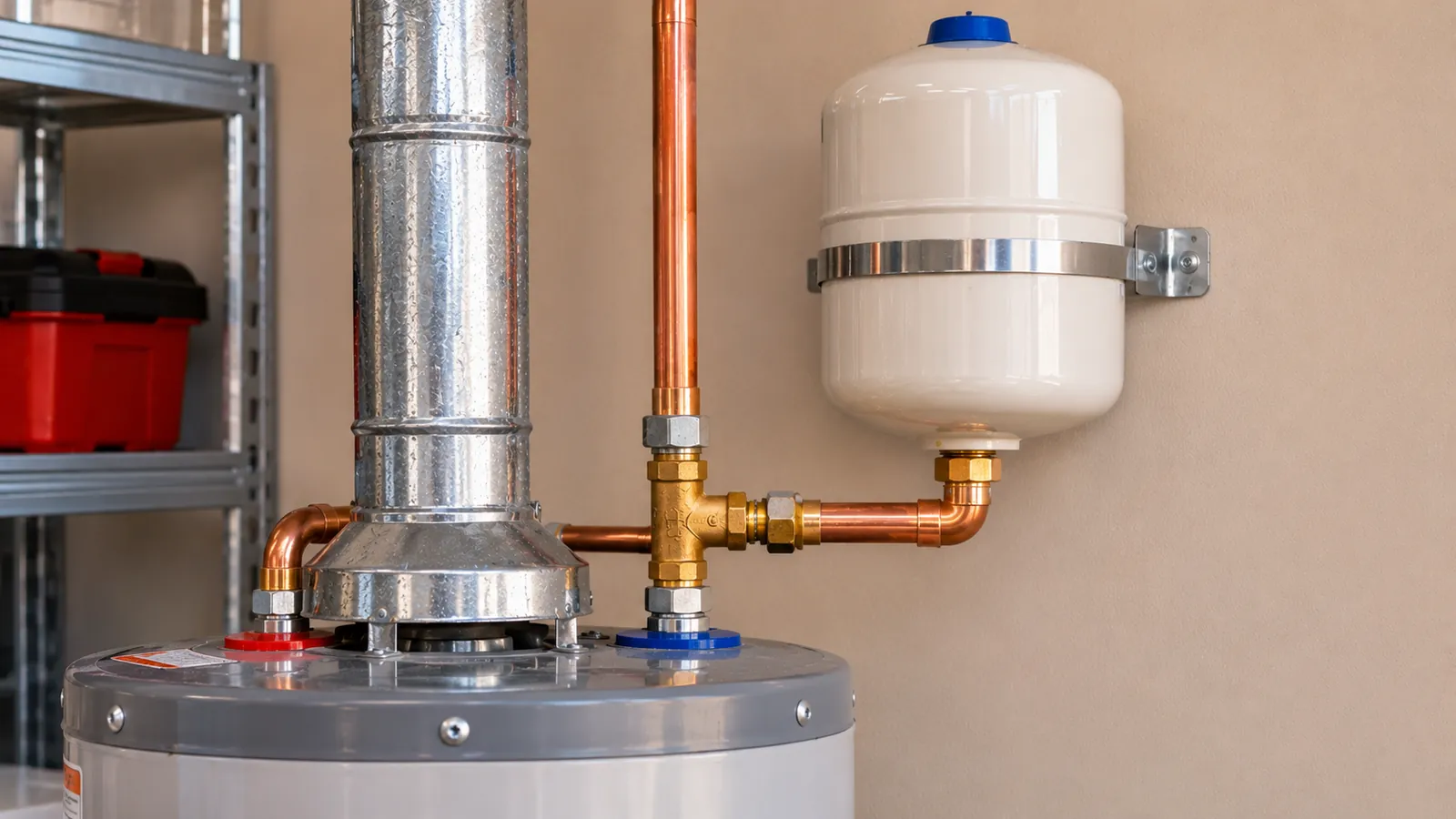
- Code items. Expansion tanks, relief valve discharge lines, drain pans, seismic straps and venting corrections may be required on a replacement.
| Job | Relative cost | Why |
|---|---|---|
| Repair (thermocouple, element, valve) | $ | One part and a service visit |
| Same-size gas or electric tank swap | $$ | Heater plus standard install |
| Heat pump water heater | $$–$$$ | Higher equipment cost, may need a circuit; rebates help |
| Tank to gas tankless conversion | $$$ | Gas line upsizing, new venting, condensate drain |
Albuquerque-specific costs
- Altitude: gas units must be suited and set up for elevation.
- Hard water: a water softener or scale protection can be worth adding, especially with tankless.
- Older homes: undersized gas lines and old venting are common in Heights and Valley homes.
Lowering the cost
High-efficiency gas units can qualify for New Mexico Gas Company rebates, and heat pump units for PNM discounts. See water heater rebates. Maintenance also helps: a flushed tank with a fresh anode lasts longer.
We give you a written price before we start, and we'll quote more than one option if you want to compare.
Questions we hear
Why is tankless installation so much more?
Gas tankless units often need a larger gas line, new venting and a condensate drain, which a tank swap doesn't.
Is a bigger tank much more expensive?
Usually a modest step up in equipment cost; it can matter more if the bigger tank doesn't fit the old spot.
Do you charge to come look?
Call us and ask. We'll give you a written price before any work.